Fresh Fruits and Vegetables
Objective of Laboratory Testing
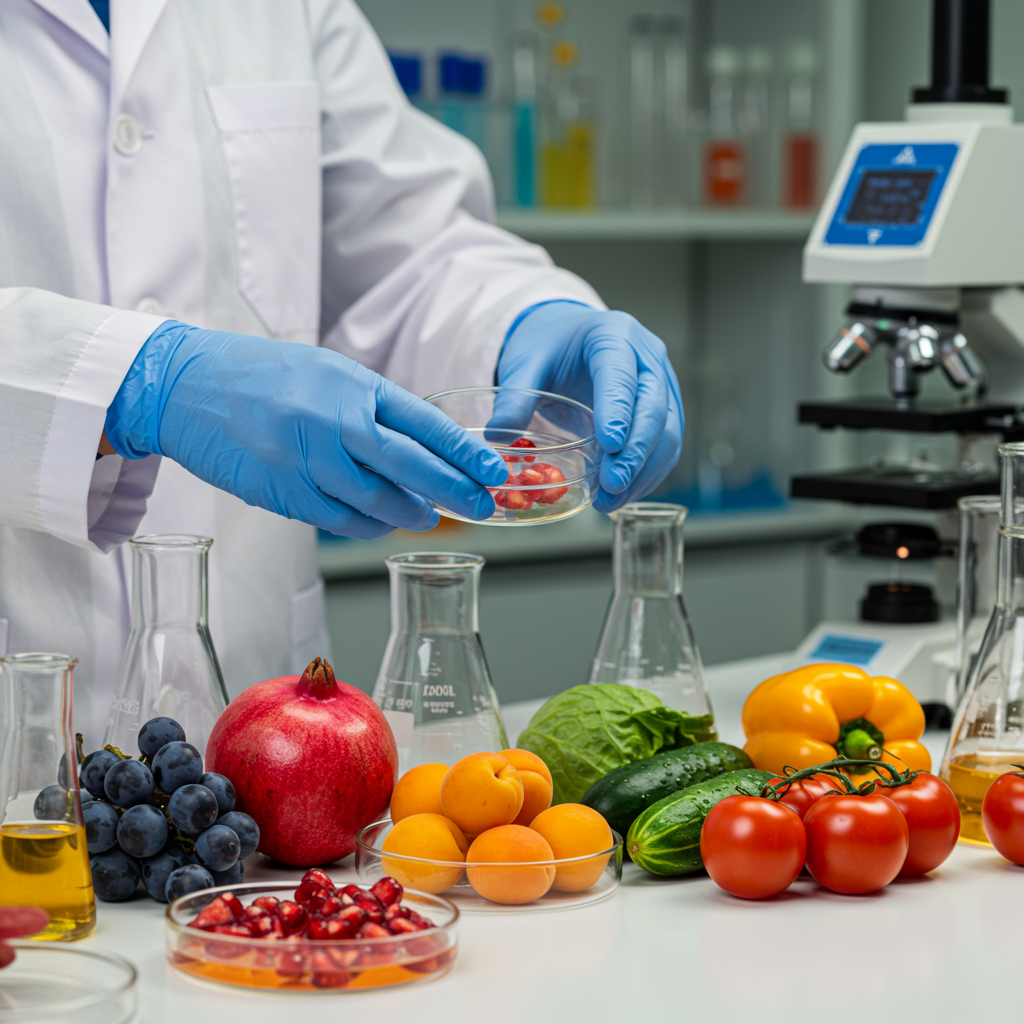
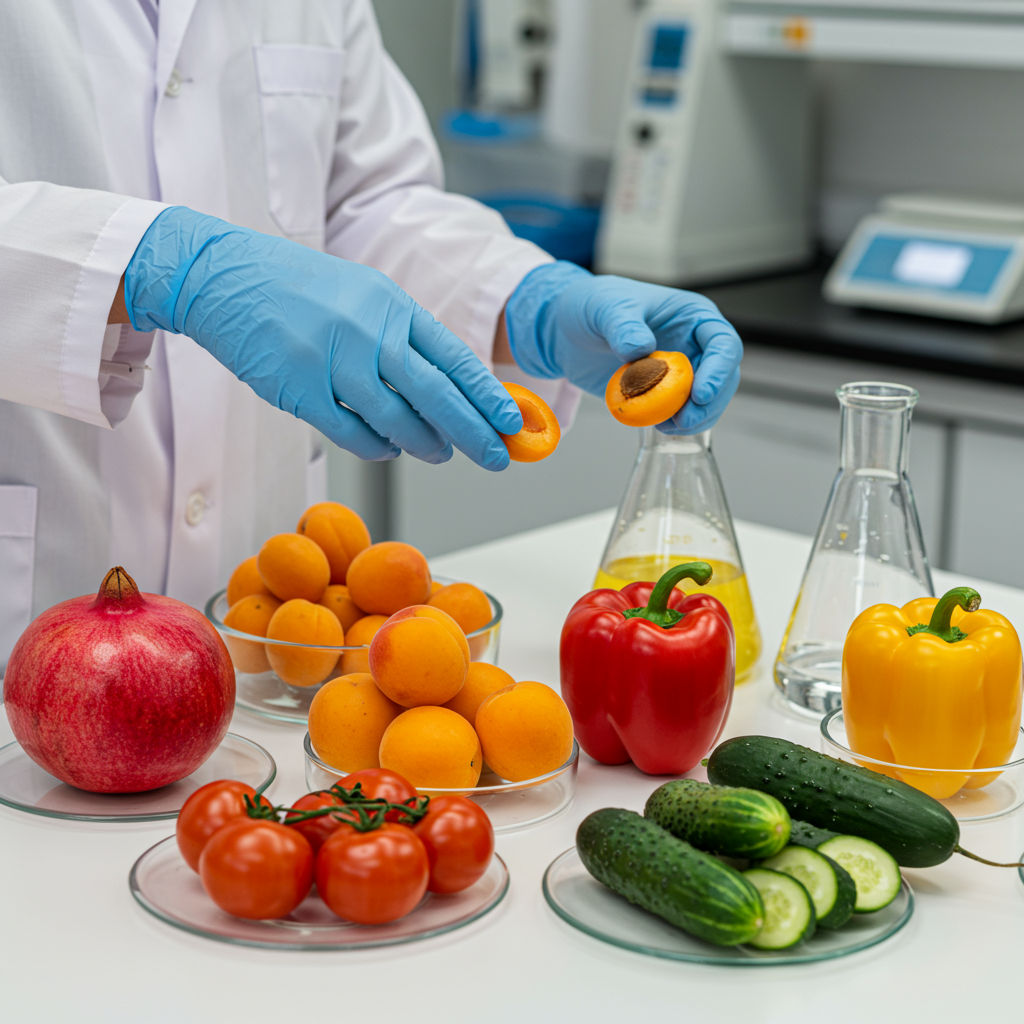
Laboratory testing of fresh fruits and vegetables is an essential prerequisite for ensuring the circulation of safe and high-quality products. Such testing enables the detection of harmful substances, the control of key quality indicators, and the confirmation of compliance with the requirements of CU TR 021 “On Food Safety.”
For manufacturers and exporters, such testing not only ensure the protection of consumer health but also serve as a reliable basis.
Key Test Parameters
Laboratory testing of fresh fruits and vegetables encompasses a range of parameters, including:
Chemical Parameters
• Determination of Energy Value• Determination of Lead (Pb) Content• Determination of Arsenic (As) Content• Determination of Mercury (Hg) Content• Determination of Tin (Sn) Content• Determination of DDT and Its Metabolites• Determination of Hexachlorocyclohexane (HCH) (α-, β-, γ-Isomers)• Determination of Cadmium (Cd) Content• Determination of Chromium (Cr) Content• Determination of Nitrates (NO₃⁻) and Nitrites (NO₂⁻)• Determination of Patulin Content• Determination of Vitamin Content• Determination of Sodium (Na) and Magnesium (Mg) Content• Determination of Titratable Acidity• Determination of Carbohydrate ContentAnd Other Relevant Parameters
Microbiological Parameters
• Salmonella spp.And Other Parameters
Provision of Test Results
Based on the test results, the laboratory issues an official test report.
